EM TECHNOLOGIES
What is EM?
Effective Microorganisms (EM) is amalgamation of beneficial microorganisms (major group are photosynthetic bacteria, lactic acid bacteria and yeast), living symbiotically in the same environment. They can be applied as an inoculum to enhance soil microbial diversity, add beneficial microorganisms to the natural environment and ecology, and reduce environmental pollution caused by harmful microorganisms.
EM technology was created by Professor – Dr. Teruo Higa – Ruykyus University, Okinawa, Japan and was applied in practice in the early 1980s. He persistently fought for the concept of expanding the technologies using natural biological products, reduce and move towards repelling the use of chemical fertilizers, pesticides and disease control by chemical
Effectiveness of EM technology
– Rice cultivation
Applying EM helps to increase the population of beneficial microorganisms in rice cultivation. It helps increase nutrients into the soil and helps plants grow better. Using EM produces healthy and disease-free crops.
– Prepare the soil
Applying EM when tilling helps the fermentation process to be faster, the nutrients in the soil are more abundant, and the quality of the plants will be stable and healthy.
– Trees and vegetables
Using EM in trees cultivation helps to flowering faster, help plants grow healthy and help increase yield. For vegetables, the soil quality is much better with EM watering and EM bokashi fertilization. Plants grow larger and healthier resulting in high quality yields.
The effectiveness of EM in aquaculture can be as follows:
- EM improves productivity and quality of products.
- EM helps to improve water quality (water turbidity, dissolved oxygen content, pH…), prevents sludge accumulation and minimizes the production of harmful gases such as: ammonia, hydrogen sulfide and methane. The use of EM products can accelerate the fermentation of excess feed waste
- EM and the metabolites produced by EM can activate microorganisms in water, revitalize aquatic ecosystems and enhance their self-cleaning ability.
- EM reduces the population of harmful microorganisms in water.
- EM helps to preserve the environment in aquaculture systems.
- EM helps reduce antibiotic use.
- Recent research results show that feed mixed with EM feed can prevent shrimp necrosis of the liver and pancreas EMS (Early Mortality Syndrome), white spot syndrome virus, reduce drug dependence such as: antibiotics and anti-bacterial agents. This method has been applied in many countries.
- Improve feed conversion ratio (FCR) and reduce mortality
Feeding with EM Bokashi can help with better food digestion and faster growth. Likewise, resistance to disease can be improved in aquatic environments with EM, reducing mortality.
- Additional benefits
Wastewater from ponds will not damage the environment. When using EM products, the quality of wastewater can be improved so that discharge will not negatively affect the surrounding environment.
– Water for animals to drink:
Mixing EM into water for pets to drink helps animals digest well, less sickness and disease. Animals grown with EM are healthier, higher quality and chemical free.
– Animal feed
Mixing EM on animal feed for fermentation helps to improve feed quality, animals eat more palatable, and promote growth. Improve Feed Conversion Rate (FCR) EM Feed is a chemical-free and safe feed for your animals.
– Cleaning the pens:
Using EM when cleaning the pens effectively eliminates odors. It reduces insects around the area and makes the environment safer for animals.
EM helps to reduce environmental pollution due to odors from decomposing organic wastes and promotes humification of organic matter. As a result, they can be used as fertilizers, helping to increase nutrients for the soil and plants.
Due to the effectiveness of EM, the Ministry of Construction has issued Decision No. N°17/2001/QD-BXD to use EM in sanitary landfills.
Applying EM . technology
eM technologies
is popular all over the world
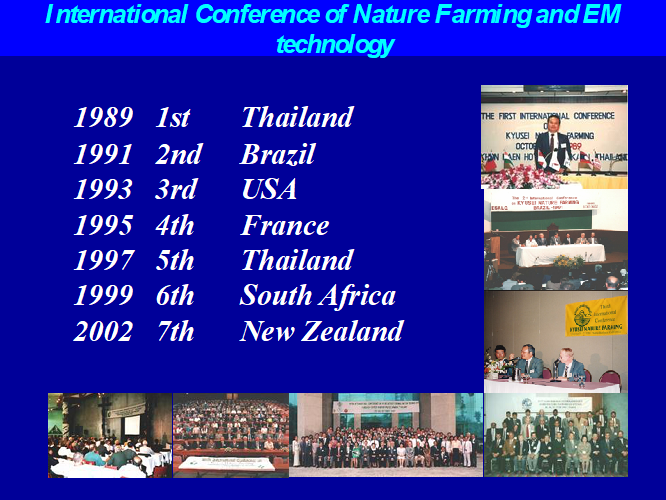
EM technology has been held by many international organizations in scientific conferences in several countries in the world in the following years:
- 1989 for the first time in Thailand.
- Second time in Brazil
- Third time in America
- Fourth time in France
- Fifth time in Thailand
- Sixth time in South Africa
- Seventh time in New Zealand